
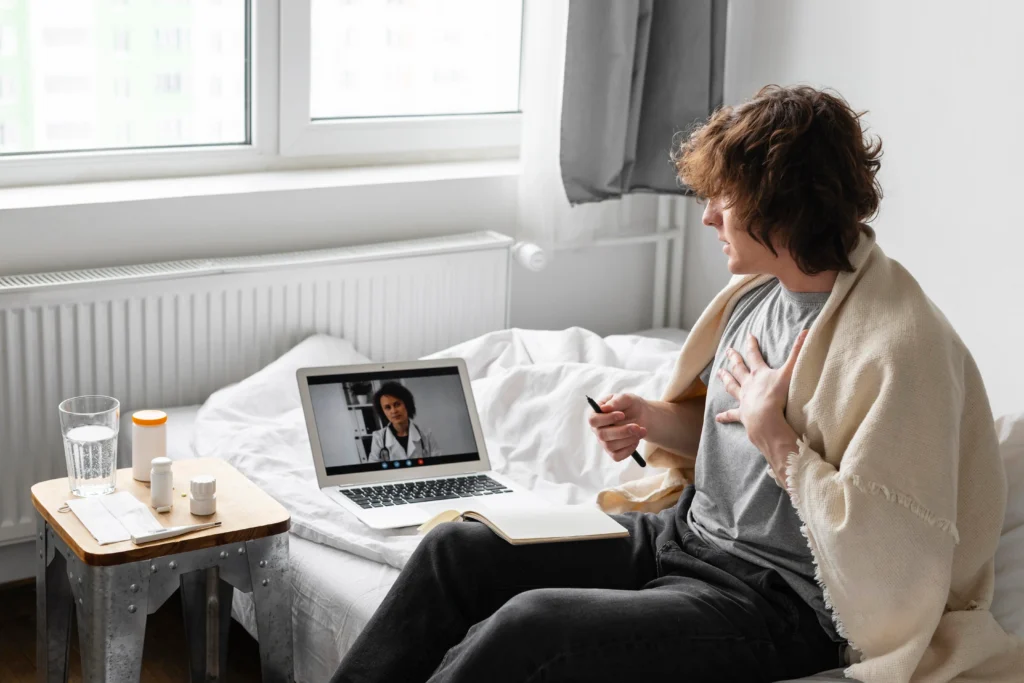
There are many of you who have been delaying asking for help because the thought of being in a waiting room makes it seem like it’s one more thing you don’t have time to do. A lot of people ask the same question before booking that first appointment: is online psychiatry effective, or is it just a workaround for people who can’t get in to see someone in person? It’s a fair thing to wonder, especially when you’re trusting someone with something as personal as your mental health.
In short, yes, for most people and most conditions, online psychiatric care is as effective as being face-to-face in an office. However, “most” is not “all,” and it’s important to be aware of the strengths and weaknesses of virtual care.
What an Online Psychiatry Visit Actually Looks Like
Telepsychiatry appointments happen over secure video, sometimes phone, instead of in an office. You still get a real evaluation, a real diagnosis when one applies, and real medication management from a licensed provider. The visit itself usually covers your symptoms, your history, and what’s actually going on in your life right now, the same ground a first in-person appointment would cover.
What changes is where you’re sitting when it happens. Some people do it from their kitchen table on a lunch break. Others do it curled up on their couch after the kids are asleep. That flexibility is a big part of why so many people search for a therapist online or an online psychiatrist near me instead of scheduling around a commute.
Does the Research Actually Back This Up?
Yes, and this isn’t just marketing talk. A large meta-analysis of randomized controlled trials covering more than 3,500 patients across 11 different mental illnesses found that telepsychiatry produced symptom improvement similar to face-to-face treatment overall, though results varied somewhat by condition. For depression specifically, separate research comparing video-based therapy to in-person sessions found the two roughly comparable in reducing depressive symptoms, with no meaningful difference in dropout rates. And a broader review covering PTSD, mood disorders, and anxiety disorders concluded that telemedicine held up against in-person care across treatment efficacy, patient satisfaction, and attrition.
It’s not just a research finding either, it’s becoming the norm. A JAMA Psychiatry study looking at national data found that more than a quarter of U.S. adults receiving outpatient mental health care in 2021-2022 got all of it through telehealth, with another fifth using a hybrid mix of virtual and in-person visits.
Depression and anxiety, which make up a huge share of what psychiatric providers treat day to day, tend to respond just as well to online treatment as they do to office visits. Some of the same research has even pointed to slightly faster or stronger symptom improvement with virtual care for certain conditions, likely because people can get in sooner and stick with appointments more consistently when they don’t have to fight traffic to make them.
Diagnosis holds up too. A lot of psychiatric evaluation depends on conversation, history, and clinical judgment, not a physical exam, which is exactly the kind of thing that translates well over video. Providers can still pick up on tone, body language, and the small details that shape a diagnosis, sometimes more easily when a patient is in a space where they actually feel comfortable, instead of a clinical office that makes them tense up.
Where It Works Especially Well
Some situations line up almost perfectly with virtual care. ADHD is a good example. Online ADHD treatment Indiana has become a real option for people who need consistent follow-ups and medication adjustments but don’t have time to keep taking off work for appointments. The same goes for ongoing anxiety and depression care, where regular check-ins matter more than any single in-person exam.
Virtual medication management fits especially well here too. Once a treatment plan is established, most follow-up visits are about how you’re responding to a medication, whether side effects are showing up, and whether the dose needs adjusting. None of that requires being in the same room as your provider.
Where It’s Not Always the Right Fit
Telepsychiatry isn’t the answer for everything, and it’s worth being upfront about that. Severe, rapidly shifting symptoms sometimes need closer, more hands-on monitoring than a video visit can offer. Certain conditions, like eating disorders, tended to respond better to face-to-face treatment than telepsychiatry in the same research, and serious substance use concerns show similar patterns in other studies. If trauma or PTSD symptoms feel unstable or severe, that’s also worth discussing directly with your provider to figure out the right level of care. And if you’re in the middle of a genuine crisis, that calls for immediate, in-person support, not a scheduled telehealth visit.
For a lot of people, the right approach ends up being a mix, virtual for routine care and medication management, in-person or a higher level of care when things get more serious.
Why People Keep Choosing Virtual Care Anyway
Patient satisfaction with telepsychiatry is consistently high, and it’s not hard to see why once you consider what people are comparing it to. No commute. No sitting in a waiting room next to strangers. No rearranging your entire afternoon around a 30-minute appointment. For people juggling work, kids, or unreliable transportation, a virtual psych NP visit can be the difference between actually getting care and putting it off another six months.
There’s also something to be said for consistency. Life gets messy, a meeting runs long, a kid gets sent home sick, and the car won’t start. With in-person care, that often means missing the appointment entirely. With virtual care, it usually just means showing up from wherever you happen to be. In mental health treatment, that kind of consistency tends to matter more than people expect.
Finding Online Psychiatric Care in Indiana
If you’ve been searching for an online psychiatrist in Indiana, or specifically an ADHD psychiatrist near me who actually has availability, MindGlow Mental Healthcare offers telepsychiatry across the state, including Indianapolis, Avon, Brownsburg, Pittsboro, and Whitestown. Dr. Lanre Olanrewaju, DNP, leads care built around real evaluation and ongoing support, not a rushed video call and a prescription.
We offer same-week psychiatry appointments for new and existing patients, so you’re not stuck waiting a month just to start the conversation. Whether you need an initial psychiatric evaluation, ongoing anxiety or depression care, or steady ADHD medication management, our virtual mental health clinic is built to fit into your actual life instead of asking you to rearrange it.
Conclusion
So, is online psychiatry effective? For most people dealing with anxiety, depression, or ADHD, the evidence says yes, and the convenience only adds to that. It’s not the right call for every situation, particularly urgent or complex cases, but for the everyday reality of managing a mental health condition, virtual care holds up well against the in-person alternative.
If you’ve been putting off getting help simply because of logistics, that’s a solvable problem. Reach out to MindGlow and let’s find a time that actually works for you.
Frequently Asked Questions
Is online psychiatry as effective as in-person care?
For most conditions, including anxiety, depression, and ADHD, research shows comparable outcomes.
Can I get a same week psychiatry appointment?
Yes, MindGlow offers same week appointments for new and existing patients.
Is virtual medication management as thorough as in-person visits?
Yes, most follow-up medication visits don’t require a physical exam, making them well suited to telehealth.